Start with traffic mapping
Trace the paths for forklifts, scissor lifts, and foot traffic before placing panels. Cross-aisle pinch points and dock door staging areas often control fence angles more than perimeter length. If aerial work happens over a path, plan overhead clearances and exclusion zones in coordination with /aerial-lift-rental/ and /scissor-lift-rental/ alternatives like /electric-scissor-lift-rental/.
Surface and base selection in mixed terrain
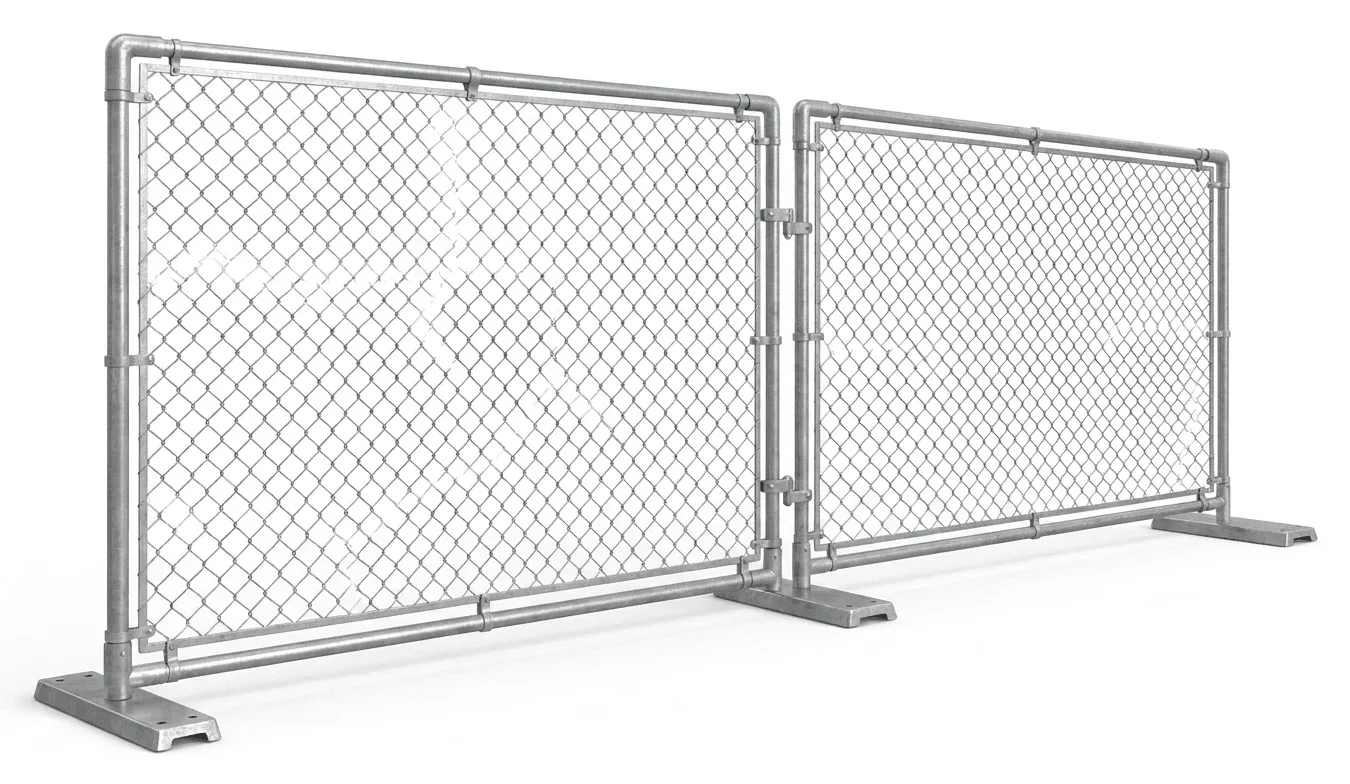
Macon’s transition from hills to coastal plain means surfaces shift from smooth slab to compacted fill within a single site. Base style and site-stability factors change with slope and soil firmness. After afternoon storms, wind and softened ground can affect panel stability; verify site procedures and the selected system’s instructions for exposure limits.
Downtown and campus considerations
Historic sidewalks, brick pavers, and tight storefront setbacks require smaller bases and careful panel alignment to keep egress clear. Where night work occurs near residences, choose barricade lines that reduce light spill and noise reflections from generators and light towers at /generators-light-towers-rental/.
Gate placement and shared laydown
Where containers at /storage-containers-rental/ define storage, set gates so pallet jacks and telehandlers can access without reversing blind. Mark separate walk paths where visitors or staff pass through.
Weather windows and reconfiguration
Frequent pop-up storms mean fence lines should be easy to reconfigure between dry and wet phases. Plan for quick removal at critical cranes or boom access points; see /boom-lift-rental/, /articulating-boom-lift-rental/, and /telescopic-boom-lift-rental/ when lifts must reach over or through barricaded zones.