Match lift type to task position
- Work straight up on smooth floors: electric scissor lifts cover vertical tasks in high-bay aisles without exhaust. See /electric-scissor-lift-rental/.
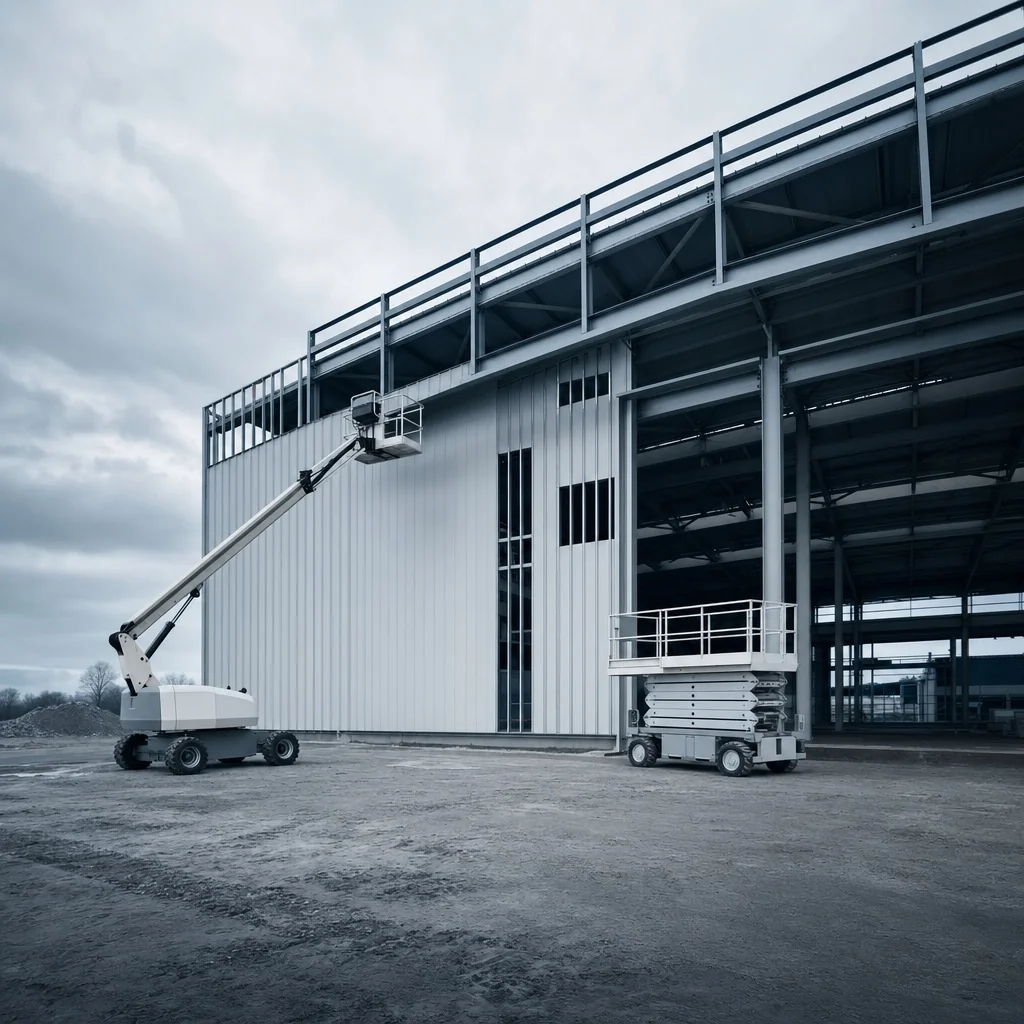
- Reach over conveyors, mezzanines, or landscaped setbacks: booms provide up-and-over access. Compare /boom-lift-rental/, /articulating-boom-lift-rental/, and /telescopic-boom-lift-rental/.
- Tight indoor service in older buildings: vertical mast lifts fit through narrow doors with low floor loading. Visit /vertical-mast-lift-rental/.
- Material placement outdoors: telehandlers and forklifts move pallets where grade and space allow. See /telehandler-rental/ and /forklift-rental/.
Surfaces across Macon job sites
Warehouse slabs favor slab scissor lifts and compact mast units. Perimeter construction and utility work on uneven grades call for rough-terrain scissor lifts; see /rough-terrain-scissor-lift-rental/. Historic interiors often prioritize lighter machines with non-marking tires and smaller point loads.
Weather shaping the plan
Heat and sudden storms influence outdoor scheduling and equipment setup. Select units whose enclosures, tires, and controls are suited to quick weather shifts, and plan staging locations that allow rapid egress to sheltered ground according to site procedures and the unit’s instructions.
Routing and staging
Measure the narrowest point from street or gate to work face. In downtown areas, alleys and tight curbs restrict truck size and lift width. In logistics zones, dock height and cross-aisle traffic dictate when and where to stage. If containers or barricades are part of the plan, coordinate with /storage-containers-rental/ and /temporary-fencing-barricades-rental/.
Lighting and power for extended hours
When tasks extend into the evening, pair lifts with lighting and reliable power that won’t obstruct travel paths. Explore /generators-light-towers-rental/ for placement and weather considerations.